New Jersey Family Immigration Lawyers
Do You Need Legal Help?
Your situation matters. Reach out today for a legal consultation and discover how our legal team can support your goals and protect your rights.


Your situation matters. Reach out today for a legal consultation and discover how our legal team can support your goals and protect your rights.
At The Scheer Immigration Law Group in Morristown, NJ, we focus exclusively on immigration law, handling everything from visas and green cards to deportation defense. With over 25 years of experience, our team is known for delivering knowledgeable, effective representation to clients across the U.S.


Attorney Susan is excellent attorney. She gave all answers of my questions and calmly explain me the process of immigration. I would highly recommend her. She wait patiently and answer all the questions you have in your mind. Thanks
Susan & her team at the Scheer Law Group have been extremely helpful in streamlining & expediting our process. They are easily reached & helpful when needing questions answered. It was comforting having them in our corner as we check things off our list. We are well on our way to the finish line. Thank you!!!
The Scheer Law Group helped my parents get their Green cards over 20 years ago. This changed our Mr family’s life in a wonderful way! We will always be grateful for their professional and compassionate service!
The Scheer Immigration Law Group are always so willing to help. My friend, Julio, is receiving his first work permit in 5 years! Every time I have any question, they are always there and willing to help! Jeffrey in specific is a wonder. He is so attentive and always wants to make sure we are well taken care of
The Scheer Immigration Law Group is the perfect office to help us with our immigration matters. We have just finished preparing for our citizenship test and feel like we are ready to take on the world. Anybody that needs immigration help, I recommend them a million times over
See what our clients have to say about our law firm and the people who are a part of it.

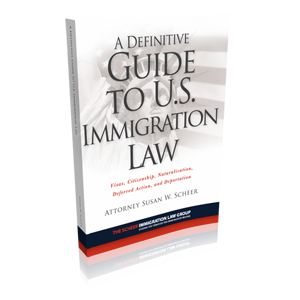
Learn what you should and shouldn't be doing to help your personal injury case. Fill out the information below to receive your free PDF.
If you are attempting to gain citizenship for your family, you are going to want an experienced New Jersey Family Immigration Lawyer. Morristown Immigration Attorney Susan Scheer has over 25 years helping families stick together and can help the process start immediately. Our entire staff is bilingual.
At The Scheer Immigration Law Group, our New Jersey Family Immigration Lawyer recognizes the importance of family. Many citizens and legal permanent residents seek family based visas to reunite with their loved ones and continue their lives together in the United States. Obtaining a visa can be an arduous and complicated process, but having an experienced New Jersey Family Immigration Lawyer on your side can prevent a host of problems and delays. Over the past 25 years, Susan Scheer has developed a high level of proficiency helping people obtain family based visas. If you are a citizen or an LPR, and have a relative you wish to sponsor, contact our to speak with a knowledgeable immigration lawyer experienced in family based immigration.
That depends on a couple of factors, including your citizenship status, and your relationship to the relative you seek to sponsor. The processing time for U.S. citizens petitioning for relatives is commonly shorter than the time legal permanent residents face when doing the same. Also, spouses, parents, and unmarried children under the age of twenty-one are generally accorded a shorter processing time than siblings and married children.
The State Department also publishes Visa Bulletin every month. It rates the backlog according to country, relationship, and citizenship status of the petitioning relative. This chart is a reliable predictor of the processing time, once all the paperwork and interviews are complete.
Once you have obtained legal permanent resident status, you can petition to bring your relatives to the United States. However, the wait may be long. Even for a spouse, you could wait as long as two or three years before your spouse’s visa takes effect. If you obtain your U.S. citizenship, a petition for your spouse, parent, or unmarried minor child may be processed without any waiting.
Whether you decide to become a citizen or not, our law firm can assist you with every step of the visa petition process. New Jersey Family Immigration Lawyer Susan Scheer can walk you through the paperwork and help you choose the options that best suit your circumstances. If your relative is in the U.S., we attend arrange to the interview with them. We also coach all parties prior to the interview, and deal with any problems that may arise.
If you have questions about bringing a relative into the U.S., feel free to contact our office. We would be happy to discuss your options with you.
Once you have obtained legal permanent resident status, you can petition to bring your relatives to the United States. This includes your spouse, children (minor or adult, single or married), and siblings. However, the wait may be long. Even for a spouse, you could wait as long as two or three years before your spouse’s visa takes effect. If you obtain your U.S. citizenship, a petition for your spouse, parent, or unmarried minor child may be processed without any waiting. Spouses and minor children can take four to six months, while married children cases can take up to seven years, and sibling sponsorships can take up to ten years. So, don’t wait. If you’ve obtained citizenship and are interested in securing visas or green cards for your family members in the future, contact an experienced New Jersey Family Immigration Lawyer and start the process right away.
If you got a green card through marriage, there is a five-year freeze on your ability to sponsor a subsequent spouse. You can request that USCIS lift this restriction, but you would have to provide evidence that your marriage was in good-faith. Generally, this means producing birth certificates of children born into the marriage. You might also secure a waiver if the spouse who sponsored you is deceased. If you did not have children and the divorced spouse who sponsored you is alive, you will have to wait five years before sponsoring a new spouse for a green card.
If you are married to a U.S. citizen you may apply for an adjustment of status to become a lawful permanent resident (LPR) without having to leave the country and apply for an immigrant visa. You must:
If you are living abroad you must interview at the U.S. Embassy in your country. If you are living in the U.S. but not allowed to interview here, you will have to travel to your home country and interview at the Embassy there.
If your fiancé(e) is a U.S. citizen but you are not, you may apply for a K-1 visa (the “fiancé(e) visa”) to travel to the U.S. and marry your fiancé(e) within 90 days of arrival. You will apply for adjustment of status to a permanent resident (LPR) with the Department of Homeland Security’s (DHS) U.S. Citizenship and Immigration Services (USCIS). Because a fiancé(e) visa permits the holder to immigrate to the U.S. and marry a U.S. citizen shortly after arrival in the United States, the fiancé(e) must meet some of the requirements of an immigrant visa. Eligible children of K-1 visa applicants receive K-2 visas.
You will need certain documents to make a successful I-129F application for a K-1 visa. (Supporting documentation should include those items that span the time from when you first met until the time of filing the I-129F. In other words, INS will be looking for evidence that you have had ongoing contact with each other and possess a present intent to marry.) These include:
You cannot come to the U.S. to marry a someone you have never met in person, nor someone you have not seen in person in over two years. Skyping, etc., does not count.
At the time of the consular interview, the Petitioner will be required to submit evidence of financial ability to support Fiancé(e): job letter, bank letter, tax return(s).
You can apply for a Consular Report of Birth Abroad. This is proof of identification and citizenship, but isn’t a travel document – it can’t replace a passport, for example. However, you can apply for a passport for your child in the same visit to the embassy. The consul or embassy will give you one original. Hang on to this – it won’t be easy to get a replacement.
The Violence Against Women Act could help in this situation. Singed in 1994 and reauthorized with expanded terms in 2013, VAWA includes a provision allowing victims of domestic violence (women or men) to apply for U visas. The applicant must have had a bona fide marriage to a U.S. citizen or a green card holder, must have suffered physical or emotional abuse, and must have been cohabitating with the abuser. The applicant may file even after divorce from the abuser, so long as he or she files within two years of the divorce.
Under VAWA, a victim of abuse could file an I-360 petition for a green card, a form of self-sponsorship. There’s a significant requirement of documentation (dealing with the conditions above), but USCIS usually approves these petitions within six months.
Also, VAWA may extend beyond spousal relationships. In at least one case, a mother of a U.S,. citizen whose schizophrenia caused him to be abusive did successfully petition for a green card under VAWA.
A U.S. citizen’s criminal history will not affect his or her ability to sponsor someone for a green card, unless a court convicted the person of a crime that falls under Megan’s Law. Megan’s Law is a federal policy requiring authorities to make certain information about sex offenders publicly known. A registered sex offender cannot sponsor a green card application unless that individual has undergone rehabilitation and can offer evidence that he or she will not harm the party seeking sponsorship. This decision is entirely at the discretion of immigration officials. If this concerns you, seek counsel from an experienced New Jersey Family Immigration Lawyer, and perhaps a criminal defense attorney.
It’s unwise to generalize about cases like these – too many factors could determine the outcome. However, if you have been in the U.S. for at least 10 years and have U.S.-born children, especially children who are not babies, and who have been integrated into the school system and the culture; if you have no criminal record and have evidence of good character; you may be able to apply for cancellation of removal. You will go to a trail – ideally with an attorney. Be prepared to document all of the above, as well as the extraordinary hardship your U.S. citizen relatives would face if you were deported.
You might be worried about a younger relative or friend facing deportation. More and more, young people attempt to cross the border into the U.S. on their own or with groups, without guardians. They are detained and released, but sometimes receive notification of a hearing.
Because of the Special Immigrant Juvenile Program, these children might not be deported, but could instead apply for a work permit and a green card. They must be under 21, unmarried, and abandoned or neglected (according to a local Family Court order), and in some cases attending school. Under these conditions, a young person might adjust his or her status in the U.S through an I-360 petition.
If you’re seeking to bring your loved ones to the United States, The Scheer Immigration Law Group is here to help. With over 25 years of experience, Morristown Immigration Attorney Susan Scheer has helped countless families navigate the complex U.S. immigration system and reunite with their loved ones. Whether you’re sponsoring a spouse, child, parent, or sibling, our bilingual team is committed to making the family-based visa process as smooth and stress-free as possible. We provide personalized legal support from your initial consultation through to the final interview, helping you avoid delays and understand every step of the journey.
Don’t wait to start the process of bringing your family together—contact our office today to schedule a confidential consultation and explore your options with an experienced New Jersey family immigration attorney.
Se Habla Español | Credit Cards Accepted | Flexible Payment Plans Available

Excellent experience worked with Susan Scheer’s team for over 7 years for multiple different types of immigration cases. Every time always successfully approved. Would highly recommend!


